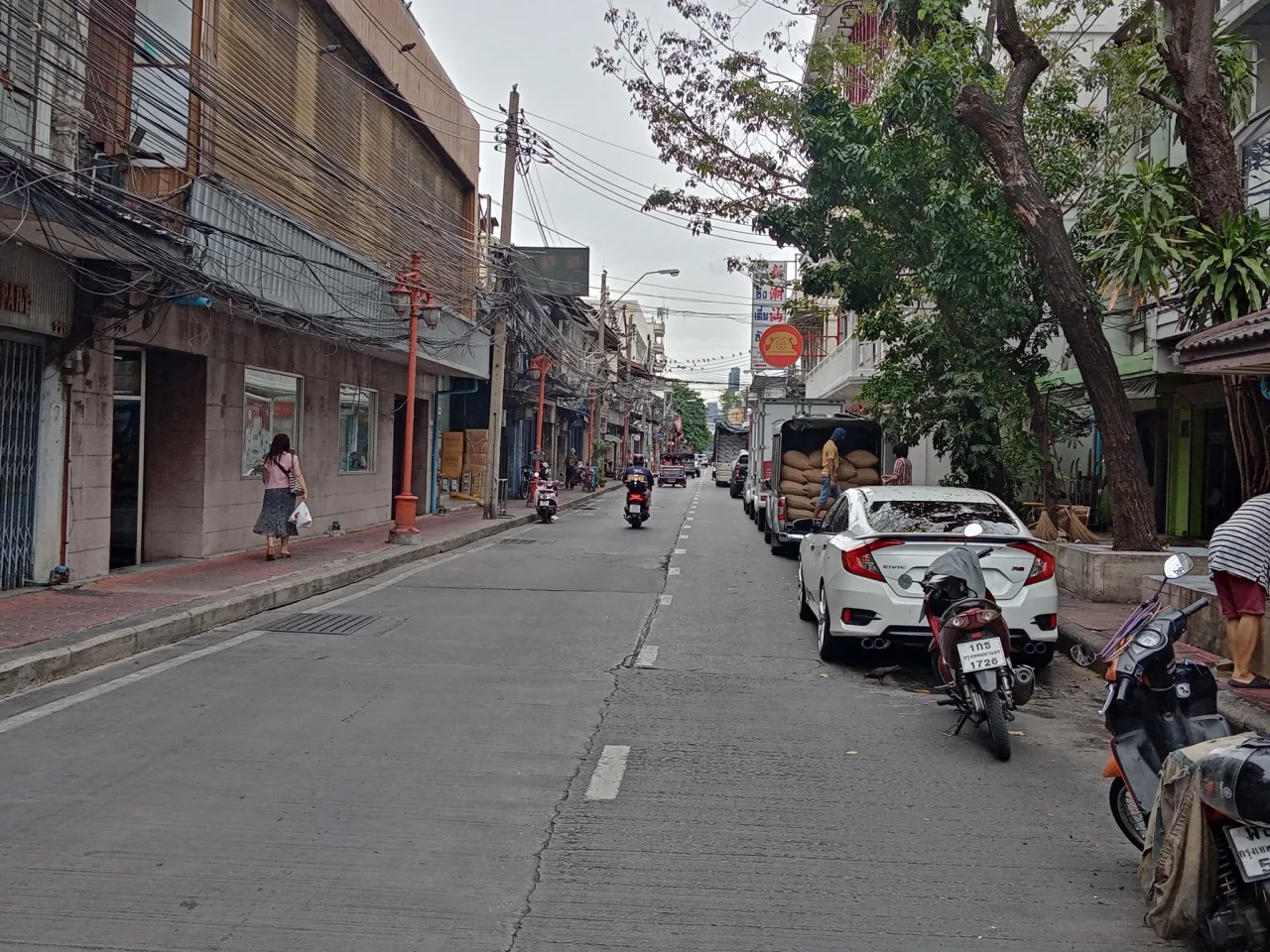
Bangkok has streets that are best seen from the back of a tuk-tuk. Song Wat is one to see on foot. At the Ratchawong end, delivery carts still work the doors of old wholesale shops. A few minutes farther along, you can stop for a Teochew steamed bun, step into a gallery in a former shoe warehouse and catch a glimpse of the Chao Phraya between buildings. The distance is short. The temptation to keep stopping is the point.
In November 2026, Time Out ranked Song Wat Road No. 1 on its list of the world’s coolest streets. Time Out Bangkok’s Instagram announcement put the street’s old merchants and new independents side by side. Here’s how to spend a day getting to know both, including what to see beyond the cafés and when to keep walking into Talat Noi.
Song Wat at a glance
- Neighbourhood: Chinatown, Bangkok
- Time to allow: 2–3 hours or a half-day with Talat Noi
- Arrive by: Wat Mangkon MRT or Ratchawong Pier
- Best for: shophouse architecture, street food and independent galleries
Where is Song Wat Road?
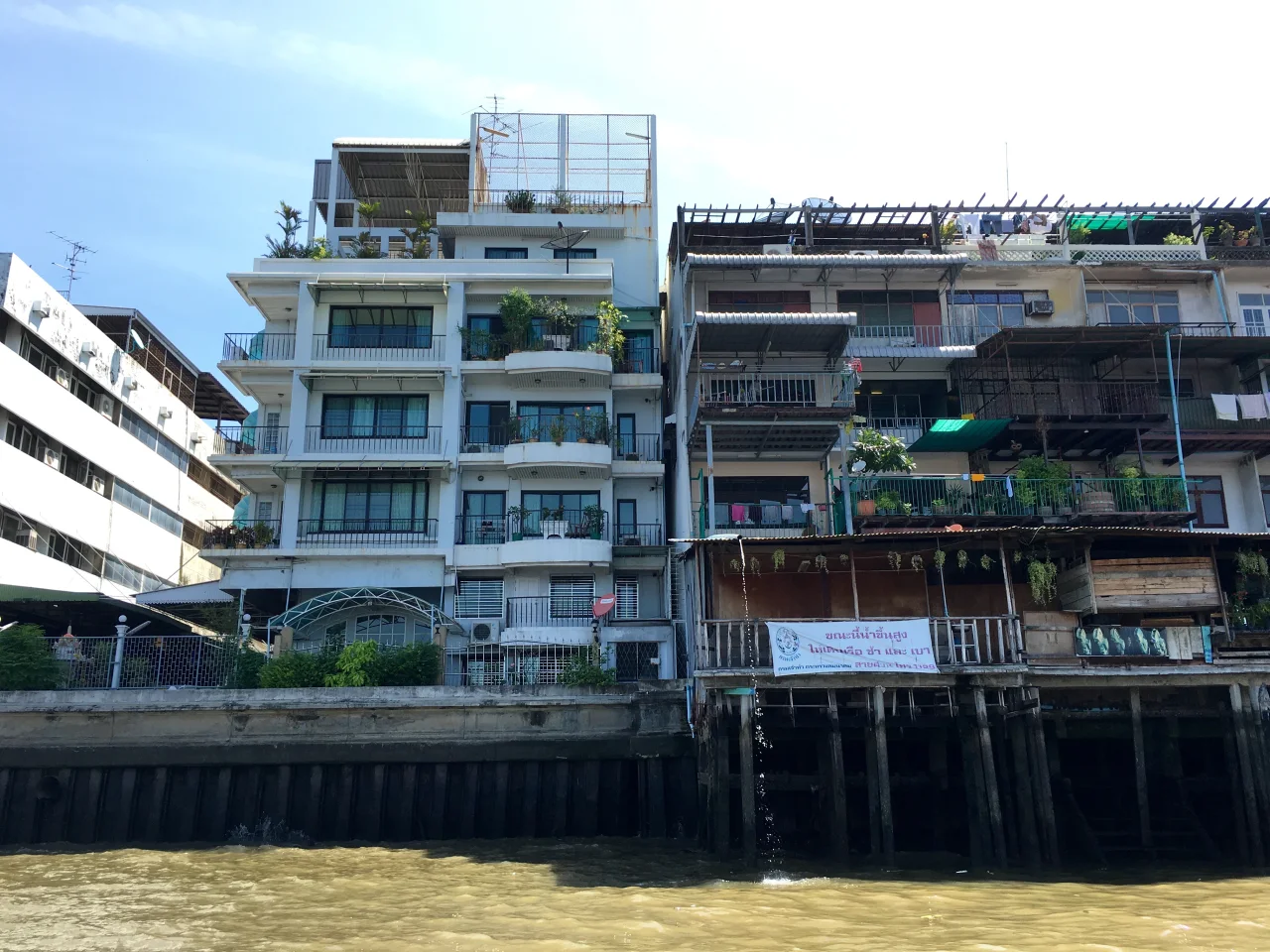
Song Wat Road (ถนนทรงวาด, Thanon Song Wat) runs through Bangkok’s Samphanthawong district, along the Chao Phraya side of Chinatown. The most useful entry points are Ratchawong Pier from the river and Wat Mangkon station from the MRT. Yaowarat is the better-known main drag; Song Wat runs closer to the water. Talat Noi lies farther along the Chinatown riverfront and makes a natural second leg. Allow two to three hours for Song Wat itself, or half a day if you’re taking in the galleries, lunch and Talat Noi. See Thailand’s official walking-route guide.
Before the cafés: the road the king drew
The name Song Wat is traditionally associated with King Chulalongkorn, Rama V, drawing a route for the road on a map. It took shape during his reign as Bangkok was reworking the crowded commercial streets around Sampheng. Connecting piers, warehouses and shophouses made it easier to move rice, spices and other goods between river traffic and the traders of Chinatown. Old warehouse doors and freight entrances still make sense when you picture the street serving that trade. Thai Airways’ historical overview and the Song Wat urban heritage study trace this earlier life.
The street was never the work of one community alone. Thai-Chinese merchants established businesses and shrines; Indian textile traders left their mark on its architecture; Muslim merchants had a place to worship nearby. The Chinese shrine, Buddhist temple and mosque are real places of worship, not themed stops. Chulalongkorn University’s architecture research explains how the different communities shaped Chinatown.
The newer creative scene has given some old buildings another use. PLAY Art House turned a former shoe warehouse into a gallery. And at Bangkok Design Week 2026, the historic Tuk Khaek building hosted Merchants of Song Wat, a life-size game and installation that took the street’s trading past as its starting point. Walk the road today and you’ll find contemporary work in the same stretch as wholesalers who never left.
10 best things to do on Song Wat Road
1. Arrive by river at Ratchawong Pier
If you’re coming from another riverside stop, aim for Ratchawong (N5). The pier explains the street better than a photo can: the river was the route into this quarter long before it was a view to book for dinner. Walk inland to Song Wat and look for the transitions from loading doors to shophouses. Confirm your boat stops at N5 before boarding; the operator’s schedule varies by service.
2. Read the shophouses, from Tuk Khaek to the Fruit Building
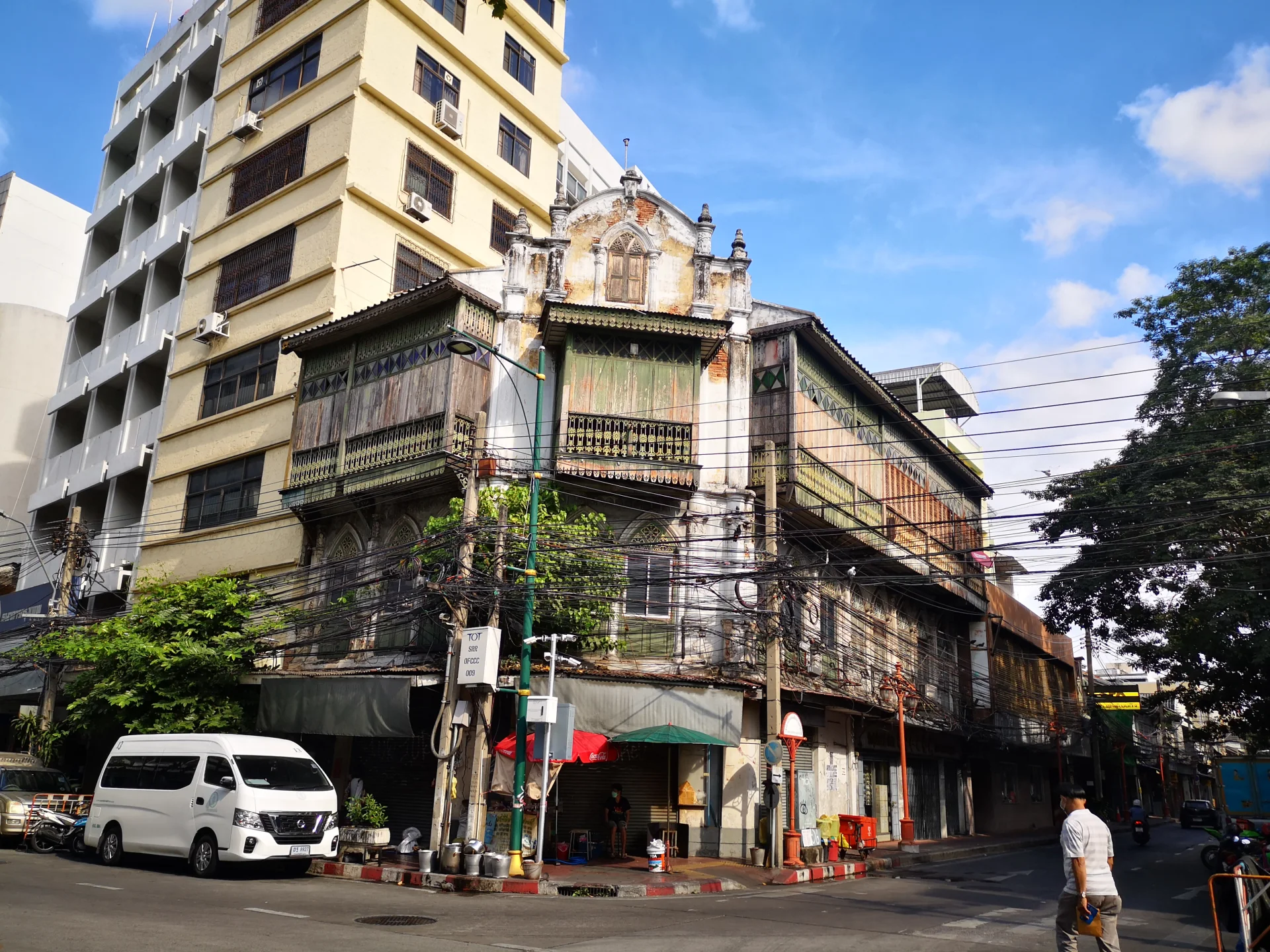
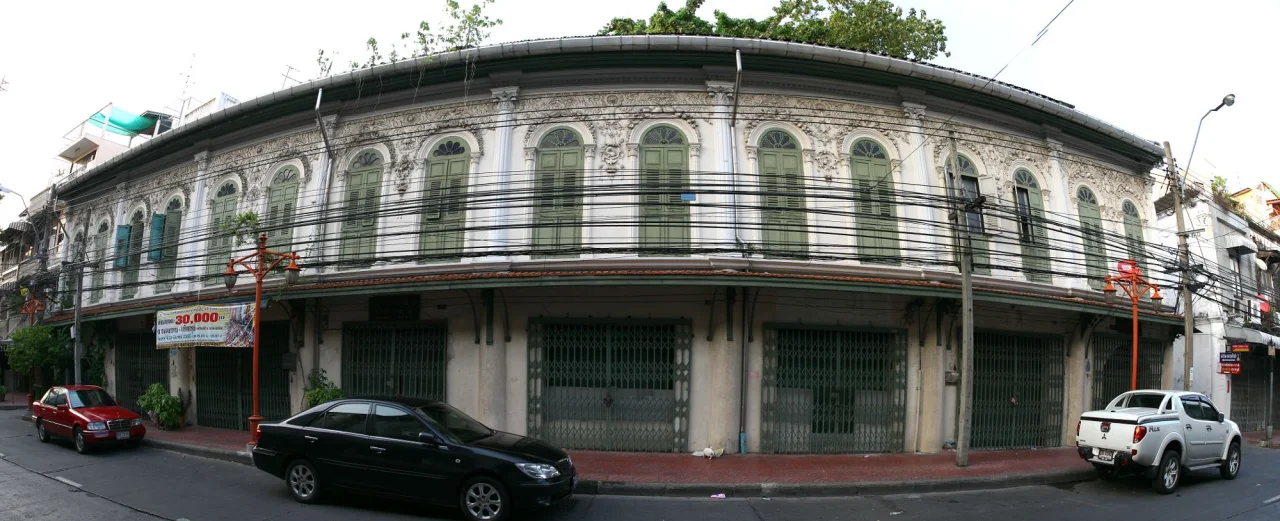
At the Ratchawong junction, look for Tuk Khaek, the former Indian textile-trading building. Farther along, the Fruit Building is a reason to look up: its fruit-shaped plasterwork is easy to miss from directly underneath. Elsewhere, compare narrow shopfronts with the broader openings of the old warehouses. Some doors have been repainted or repurposed; others open on shops that still trade. The MICHELIN Guide’s Song Wat walk identifies both buildings and their context.
3. See a shrine, a school, a temple and a mosque
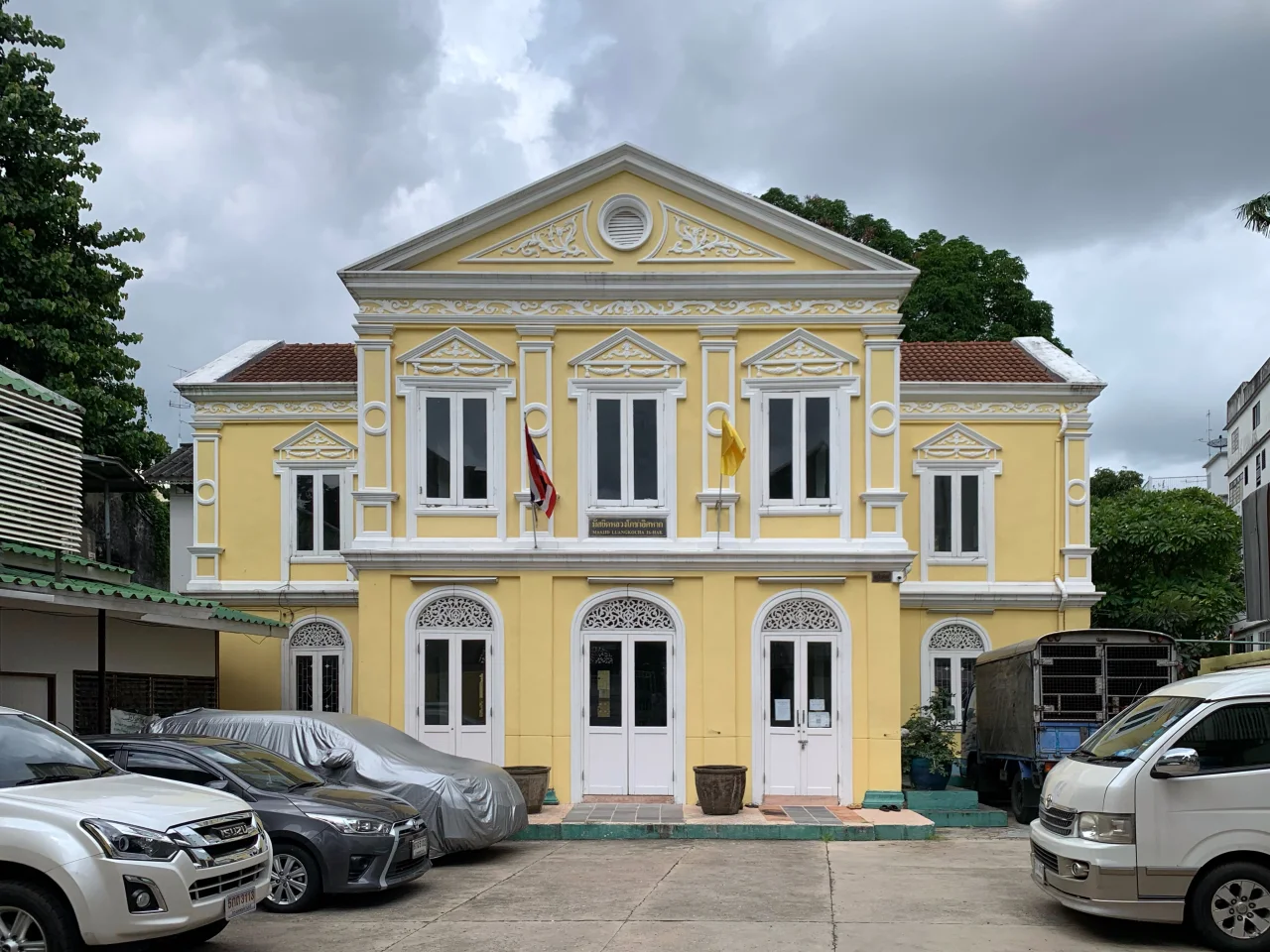
Start at Lao Pun Tao Kong Shrine, a Thai-Chinese place of worship close to the Peiing School. The school is a working campus, so appreciate its architecture from outside unless a public visit is offered. Give yourself time to see Wat Pathum Khongkha, the Buddhist temple farther along, and to look at the exterior of Luang Kocha Itsahak Mosque. The mosque was built to serve a trading community that needed a place to pray. Dress respectfully and check permission before entering or taking photographs. Chinatown’s architectural history.
4. Look for the elephant mural, then step into PLAY Art House
The upside-down elephants by Belgian street artist ROA are one of Song Wat’s best-known murals. Look from a safe spot; the wall faces a working parking area. Then go to PLAY Art House, at 993 Song Wat Road, for a change of scale. The gallery’s programme changes, so check what’s on rather than expecting a permanent display. The building itself is worth the detour: it’s a reminder of how a warehouse can take on another life without losing its character. Song Wat street art and gallery details.
5. Order coffee at a neighbourhood roastery
Start at Song Wat Coffee Roasters, at 578 Song Wat Road, near Lao Pun Tao Kong Shrine. It’s a good first stop if you’d rather have one well-made coffee and keep walking than spend the morning in a queue. Terroir BKK is another option if you want to talk beans and taste a single origin. For something different, look up Choch SongWat for Thai-grown cacao. Neighbourhood merchant directory.
6. Try a Teochew steamed bun at Gu Long Bao
Save space for a bao. At Gu Long Bao, the steamed buns are the work of generations of the same family. Look for the Song Wat branch rather than assuming the first map result is the one you want. A bun is an easy snack to fit around lunch; if there’s a queue, buy one to go and step away from the doorway so the people who live and work here can get through. MICHELIN’s neighbourhood food guide.
7. Sit down to a Chinatown lunch
For fish-ball noodles, look for Lim Lao San. For something richer, Rong Klan Nuea serves beef noodles in an old shophouse. Urai Braised Goose is a good reason to start the day earlier if you want a long-running neighbourhood favourite. At E-ga Food Lab, the draw is regional Thai home cooking in a setting where it makes sense to order several dishes to share. For a separate evening plan, consider Potong, Chef Pam’s Thai-Chinese tasting-menu restaurant in nearby Chinatown, and reserve ahead. Food stops and context · Potong reservations.
8. Shop for Thai craft and independent design
Road of Cinnamon is a good place to look for ceramics and textiles instead of another generic souvenir. At SAAN Song Wat, browse contemporary Thai homewares and small gifts; at Copenn, discover locally made fragrances. If something catches your eye, ask where it was made. Over a short walk you can see how Bangkok’s old merchant street is still a place to sell goods, just with a broader range of makers represented. Thai Airways’ guide to local craft stops · Current merchant directory.
9. End the afternoon above the river
For a sunset stop, BARBON is a rooftop option above Hostel Urby. Check the opening hours and allow time for a table on busy evenings. If you’d rather keep moving, retrace part of the road at dusk, then head up towards Yaowarat for dinner. The transition from the dimmer warehouse fronts to Chinatown’s brightly lit main road is one of the best parts of linking the two on foot. Riverside bars and visitor details.
10. Walk on to Talat Noi
If you have another hour, carry on to Talat Noi for narrower lanes, metal workshops, shrines and murals. Rong Kuak Shrine makes a useful destination; River City Bangkok is an alternative if you’d like to end indoors with art. Treat Talat Noi as its own neighbourhood rather than calling everything along the route Song Wat. Official Talat Noi walking route · River City Bangkok.
Song Wat Week 2026: 19–22 November
Visiting this week? Bangkok’s tourism calendar lists Song Wat Week from Thursday 19 to Sunday 22 November, with the theme Living Museum. The festival uses buildings and streets as a setting for art, local stories and activities. Check the current programme before planning around a specific workshop, talk or dinner. The festival is a bonus rather than a requirement: the architecture, eating and walking route are reasons to come year-round. Time Out’s festival preview.
Three ways to plan the walk
- First visit, about 2 hours: MRT Wat Mangkon → Song Wat → coffee and a bun → Lao Pun Tao Kong Shrine → PLAY Art House if open → Ratchawong Pier. Reverse the route if arriving by boat.
- A half-day for food and history: Start with the older food shops before lunch, then visit the temple and mosque area, browse Road of Cinnamon and finish in Talat Noi or by the river.
- An evening in Chinatown: Start later when it’s cooler, take a riverside drink if the bar is open, then walk to Yaowarat for dinner. Save the shrines, street-front traders and galleries for a daytime visit.
Good to know before you go
Can I walk there from the MRT?
Yes. Take the Blue Line to Wat Mangkon (BL29), then walk south towards the river through Chinatown. If the piers are more convenient, get off at Ratchawong (N5) on a service that stops there. Use the names Song Wat Road and ถนนทรงวาด if you’re getting a taxi.
Do I need tickets or a guide?
No ticket is needed to walk the public street. Venues, exhibitions, workshops and special meals can have their own entry or booking requirements. You can follow the route independently; someone interested in the architecture or commercial history might get more from a local guide. Don’t assume a private courtyard, workshop or school is open to visitors.
Is the walk suitable for children or visitors with limited mobility?
For families, keep the route short and build in a snack and a break from the heat. Narrow pavements, uneven surfaces, traffic and steps at older venues can make the full route harder for strollers or wheelchairs. Ask the places you want to visit about step-free access and consider arranging a drop-off near your first stop.
When is the best time to go?
Go in the morning for the older food shops and cooler walking, or in the late afternoon for street light and a riverside finish. Opening days vary, especially at small cafés and galleries, and some stalls sell out. Carry water and enough cash for small purchases, ask before taking close-up portraits, and keep passages and loading doors clear.
If you only pick three things, make them a first look from Ratchawong Pier, a bun at Gu Long Bao and a slow walk past the shophouses. If you’re still curious at the far end, keep going to Talat Noi. Then save another day for 10 Best Bangkok’s guide to the city’s atmospheric alleyways.
Cover photograph: Dharmadana / Wikimedia Commons · CC BY-SA 4.0. Resized and displayed with a crop.